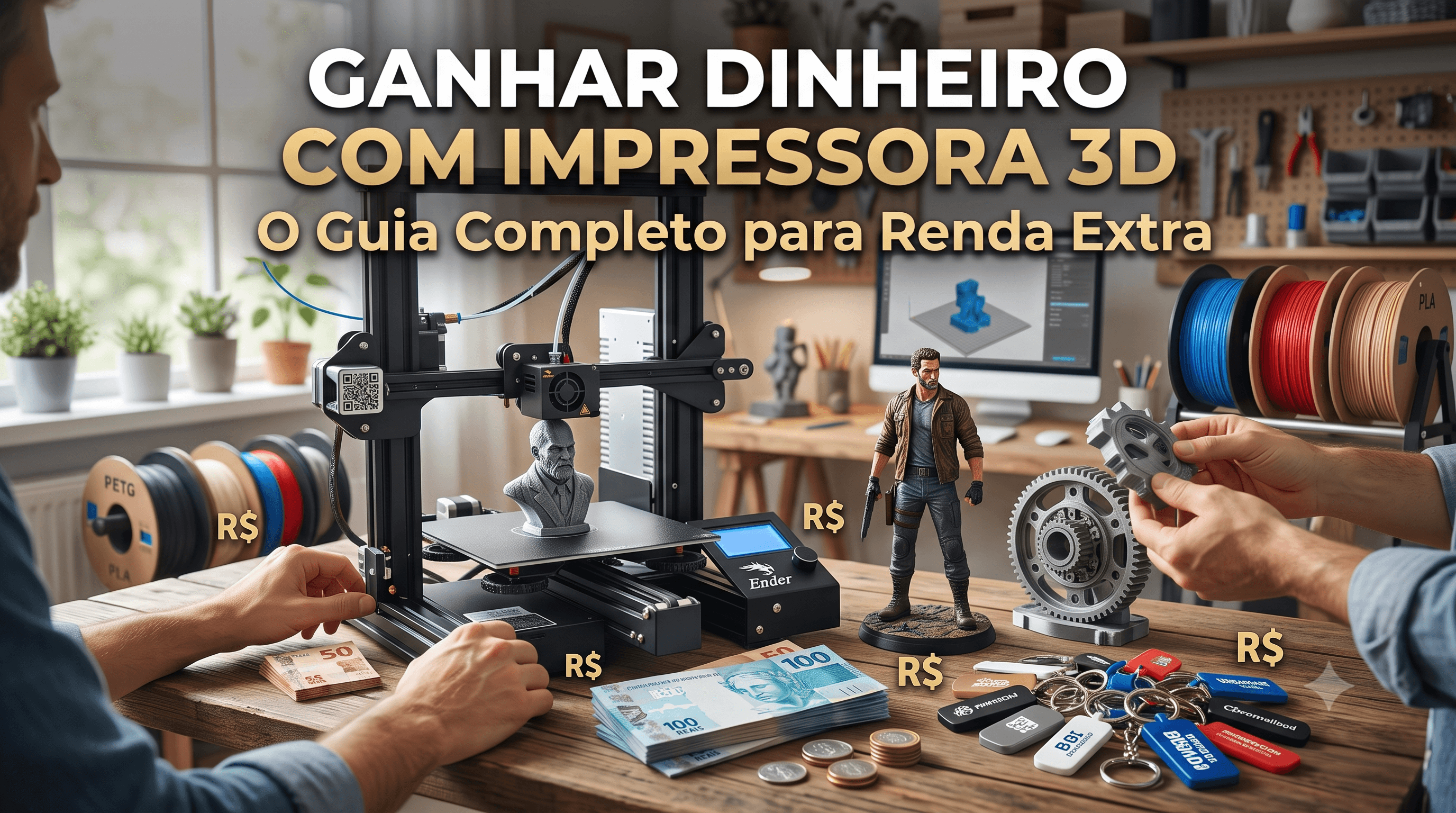
How to Make Extra Income with 3D Printer: Complete and Profitable Guide
Find out how to turn a 3D printer into a real source of extra income. See profitable niches, costs, traffic and sales strategies.
How to Make Extra Income with 3D Printer: The Complete Guide to Building a Real Business
If you're looking for a way to generate extra income, you've probably come across videos of machines working on their own and creating amazing plastic dolls. The idea sounds like the perfect passive money scenario, right?
The reality, however, requires a bit more strategy. A 3D printer is not a money printer; it is a mini-factory. And like any manufacturing business, success is not just about pushing a button, but knowing what to produce, who to sell to, and how to structure your offering.
In this complete guide, we'll put the illusory promises aside and focus on building a solid and profitable 3D printing business.
Is the 3D Printing Market Still Worth It?
The short answer is: yes, a lot. The popularization of equipment dramatically reduced the barrier to entry. Machines that cost tens of thousands of reais today can be purchased for a fraction of the price, delivering professional quality.
The competitive advantage is no longer just having the machine. What separates those who make money from those who only accumulate dust in the equipment is the ability to solve problems and focus on specific niches.
3 Highly Profitable Niches to Explore
Shooting everywhere is the quickest route to frustration. Choosing a niche allows you to drive your paid traffic, align your communication, and build authority.
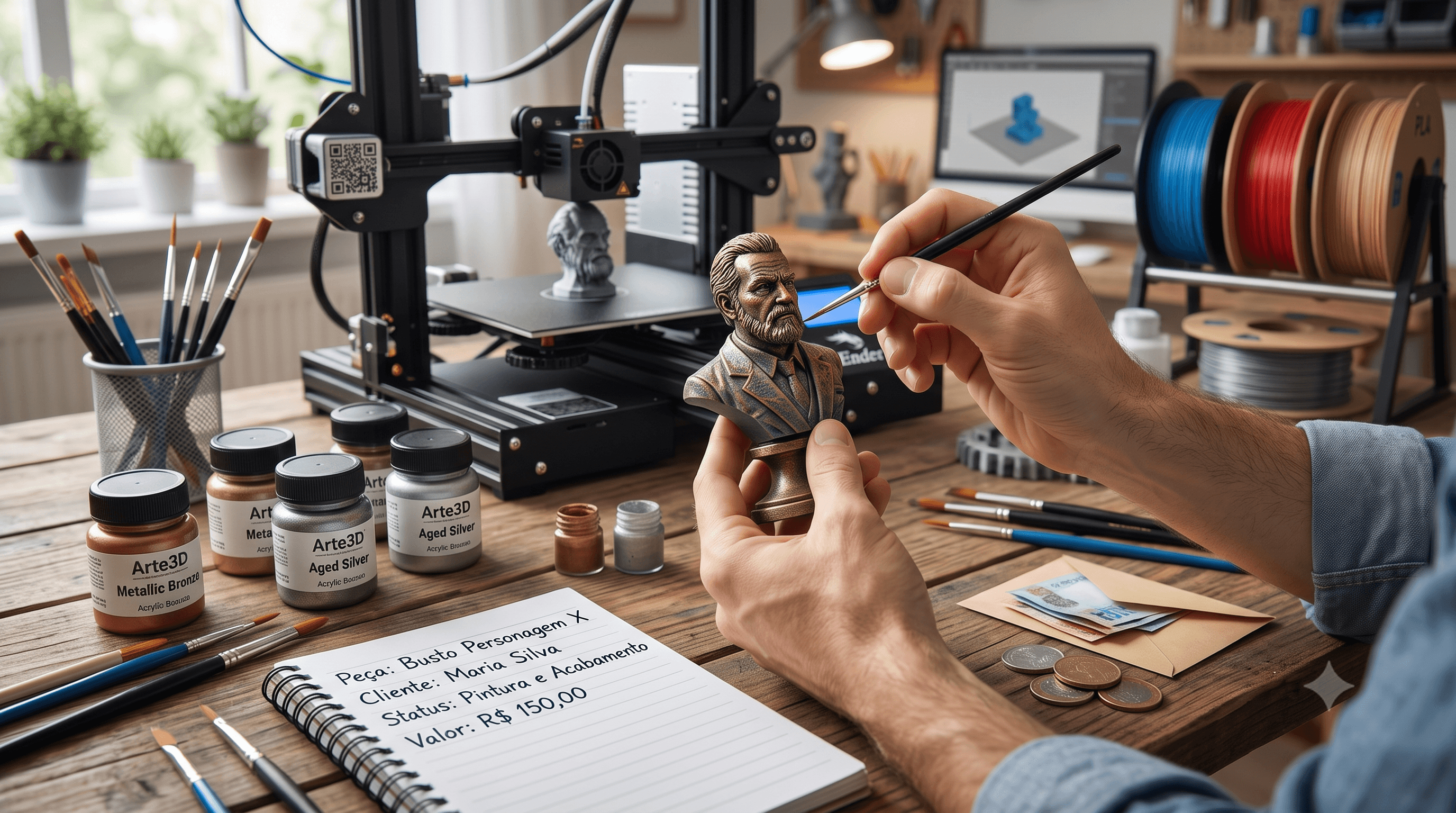
Action figures, character busts, RPG sets, and cosplay items. This is the most voluminous market. Customers are passionate and often pay a premium for well-finished, hand-painted pieces.
Strategy tip: Avoid selling only the raw printed file (which any competitor can do). The real profit is in post-processing (sanding and painting), which adds high perceived value.
Many companies need customized solutions that traditional industry does not provide on a small scale.
Examples: Custom trophies for corporate events, keychains with the company logo, ergonomic brackets for notebooks, or even measurement templates for local factories and industries.
Advantage: B2B usually buys in volume, ensuring a much higher average ticket.
You know that blender gear that broke and the manufacturer does not sell separately? Or the headphone stand that fits perfectly on the customer's desk? Selling utility is a smart strategy. Modeling spare parts requires a bit of knowledge in CAD software, but eliminates almost 100% of the competition.
Initial Costs and Return on Investment (ROI)
🧮 Calcule seu lucro real de Renda ExtraCalcular →To manage this like a real business, you need to know your numbers.
The Equipment: To start with quality, input or intermediate FDM (filament) printers (such as Creality's Ender line or the most modern ones from Bambu Lab) vary between R$ 1.500 and R$ 4.500.
The Raw Material: The filament (PLA, ABS, PETG) costs on average R$ 80 to R$ 150 per kilo.
Production Cost: A part that consumes 100g of filament costs about R$ 10 in material, plus a minimum fraction of electrical energy. If sold by R$ 60 to R$ 100, the gross profit margin is excellent.
However, the invisible cost is your time (modeling, slicing in the software, machine calibration and finishing). Price your hours.
How to Sell: Traffic and Marketing Strategies
Having the best product is of no use if no one knows it exists. This is where a professional marketing strategy comes into play.
Don't just rely on Instagram's organic reach. Structure paid traffic campaigns (Meta Ads) targeted to your target audience.
If you sell decor items, create visual ads on Instagram focused on audiences interested in architecture and interior design.
If your focus is B2B, Google Ads can be a goldmine. When a clinic owner searches for “personalized corporate giveaways,” their website needs to be on top.
Excellent to give initial traction and generate cash flow. Competition is price-focused, so use these channels to sell fast and easy production utility parts on a large scale, where volume compensates for lower margin.
Create a brand. Take professional photos of your products on a neutral background or in use in the real environment. Demonstrate the operation of the part. The customer does not buy plastic, they buy the solution or the aesthetics that your product provides.
Conclusion: The Next Step
Making extra income from 3D printing is a highly viable and scalable path, provided it is handled with the rigor of a business. Start by investing in knowledge — understand about the different types of filaments, study the basics of 3D modeling and, above all, apply sales strategies so as not to depend on luck.
The market is full of amateurs selling generic parts. The space for professionals who deliver quality, meet deadlines and know how to position themselves in the digital market is more open than ever.
Did you like the tips? Have you thought about which niche you would focus on if you bought a 3D printer today? Leave it in the comments!