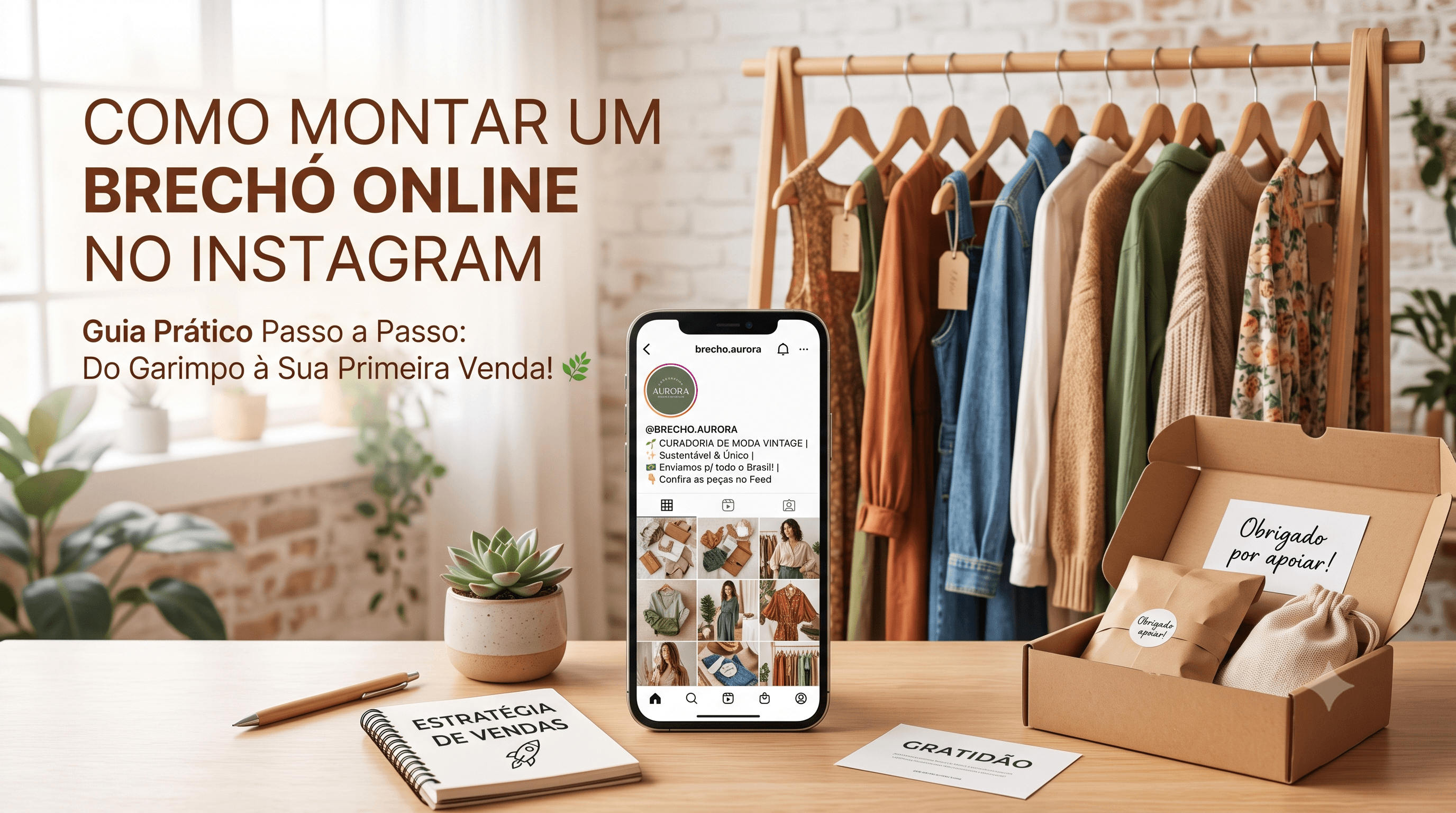
However, Instagram is a busy showcase. To stand out and turn followers into real customers, you need organization and strategy.
Here is a complete and practical step-by-step for you to get your thrift store off the ground:
---
Step 1: Mining and Curation (The heart of the business)
Before opening the account, you need products. The secret of a good thrift store is not only to sell used clothes, but to curate them (select pieces with style, quality and sales potential).
Define a niche: Are you going to sell a little bit of everything or focus on an audience? (Ex: Vintage 90s, children's fashion, plus size, luxury brands, executive fashion). Having a focus helps attract loyal followers.Where to prospect: Start in your own locker and that of family members. Then expand to charity bazaars, churches, physical neighborhood thrift stores, and even lots of detachment on sites like OLX.Quality control: Wash, iron and remove the balls from all pieces. If there is any defect (a missing button or a small stain), repair or be 100% transparent about it at the time of sale.Step 2: Structure Instagram Profile
Your profile is your physical store. It needs to be inviting, clear and give credibility.
Professional Account: Change your profile to “Business Account” or “Content Creator”. This unlocks valuable metrics and contact tools.Name and Arroba (@): Choose a name that's easy to read, remember, and type. Avoid too many numbers or *underlines* (ex: `@brecho_flor_de_lis_123`). Profile Photo: Create a simple logo (you can use Canva for free) or use a well-lit photo of yourself if you want to add a more personal touch.A Strategic Bio: Your bio should quickly tell you what you do. Example:🌿 Curatorship of vintage and current fashion.
📏 Measurements in the descriptions.
📦 We ship all over Brazil.
Payment/shipping 👇 link: [WhatsApp link or catalog]
Step 3: Photography and Visual Aesthetics
On Instagram, the photo is what sells. You don't need a professional camera, your phone is enough if you know how to use the light to your advantage.
Natural lighting: She's your best friend. Shoot near a window or outside on clear days (avoid direct midday sun so as not to create harsh shadows). Neutral background: Use a white wall, a well-stretched plain sheet, or a wooden floor. The focus should be on clothing.Show the fit: If possible, take photos of the clothes on the body (yours or a friend's). Clothes on the hanger or on the floor sell, but on the body the conversion is much greater.Details: Make a carousel. The first photo is the entire piece; the following show the label, the texture of the fabric and any malfunctions.🧮 Calcule seu lucro real de Renda ExtraCalcular →Step 4: Pricing and Payment
Collecting fair value is critical for the business to be profitable and attractive. Consider the cost of the garment, the time you spent washing/photographing, and the payout rates.
Basic pricing example:
| Item | Mining Cost (R$) | Suggested Sales Price (R$) | Estimated Gross Profit (R$) |
|---|
| Vintage shirt | 10.00 | 45.00 | 35.00 |
| Jeans (Brand) | 25.00 | 80.00 | 55.00 |
| Party Dress | 40.00 | 120.00 | 80.00 |
Step 5: The Dynamics of Sales and Posts
Don't throw all the photos at once in the feed. Create anticipation!
The "Drop" or "Batch" strategy: Let us know in the Stories during the week: *"On Thursday at 8pm we will have a batch with 15 winter jackets!"*. This creates shortages and makes people turn on notifications. Full descriptions: In the legend of each piece, put all the information: Label size, exact measurements in centimeters (bust, waist, length), fabric type and price. Clear rules: Leave in the Instagram *Highlights* how the thrift store works: how to buy (ex: "comment I WANT in the photo"), how the shipping works and what the shipping deadline is.Step 6: Shipping and Customer Experience (Unboxing)
When the person receives the package, it is time to make them loyal.
Logistics: Use platforms like *Best Shipping* or *SuperFreight*. They offer freight labels from the Post Office and carriers with good discounts.Packaging: It doesn't have to be expensive, but it needs to be done with care. Use kraft paper (which is cheap and sustainable), spray a soft smell (your trademark), and write a handwritten note thanking you for the purchase.---
The beginning may seem laborious, but as soon as you make the first sales, the process becomes automatic and very rewarding.
For us to take the next step: do you already have some separate clothes at home to assemble your first batch, or do you still need to plan your trip to a mining?